+86 151 8877 6668
+86 151 8877 6668
Technical Proposal for Precision Irrigation System, Kerchanshe Coffee, Ethiopia
A well-designed coffee plantation irrigation system must consider planting spacing, soil conditions, terrain, water source, available flow and irrigation block size. For large coffee farms, drip irrigation allows water and nutrients to be delivered in controlled zones while reducing dependence on manual irrigation.
This project demonstrates how Runnong developed a scalable drip irrigation system for a 1,500-hectare coffee plantation in Ethiopia, based on a river water source, 3.6 m × 0.5 m planting spacing and predominantly flat terrain.
This proposal outlines a modular, cost-effective, and scalable precision irrigation system, custom designed for your 1,500-hectare coffee plantation. The design is based on the following parameters:
•Project Scale: 1,500 Hectares
•Planting Spacing: 3.6 meters x 0.5 meters (Row Spacing x Plant Spacing)
•Water Source: River
•Terrain: Predominantly Flat/Even
Our primary objective is to maximize coffee bean yield and quality through efficient, uniform irrigation and fertigation management, while minimizing water consumption and operational costs. This will contribute to a more sustainable and profitable coffee production system
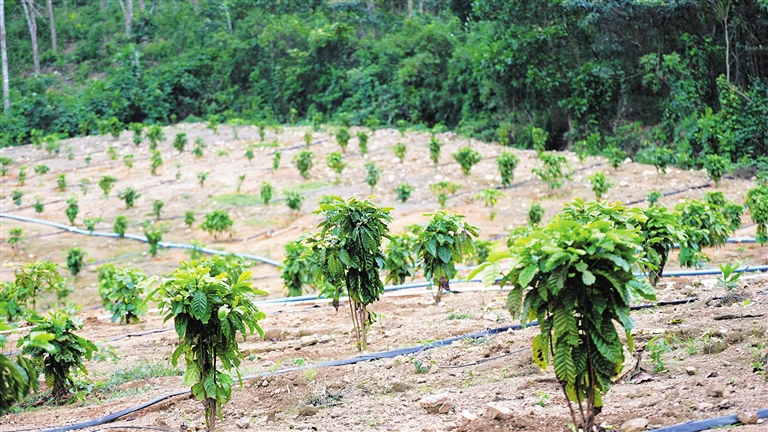
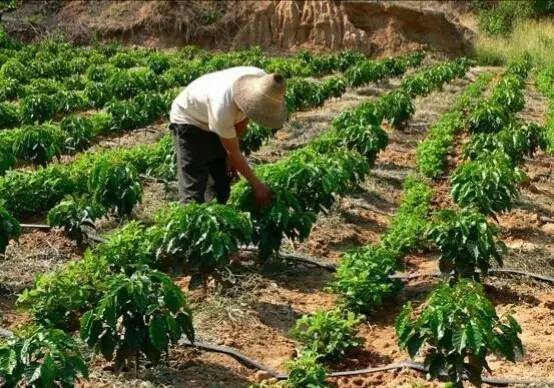
Given the significant scale of 1,500 hectares, we propose a "Zoned Control, Rotational Irrigation" strategy. The entire project area will be divided into independent Irrigation Blocks, allowing for efficient water resource management. •Single Irrigation Block Size: Based on typical pump performance parameters (flow rate of 80 m³/h), we have determined that an optimal size for each irrigation block is approximately 1.2 hectares.
•How it Works: The pumping station and head control unit will supply water to only one 1.2- hectare block at any given time. By using a system of valves, the system can sequentially irrigate each block, enabling a single pumping system to effectively manage a large land area. This approach significantly reduces initial capital investment.
In order to provide you with a final, precise system design and quotation, we require the following information:
•Site Coordinates or Layout Map: This is the most crucial step. Accurate site coordinates or a detailed layout map will enable us to perform hydraulic calculations, optimize pipeline routing and sizing, and generate a final equipment list and quotation.
•Soil Type Confirmation: Please provide confirmation of the primary soil type (sandy, loam, or clay) within the project area, as this will inform our selection of the optimal emitter flow rate.
We are prepared to move forward with the next phase of this project upon receipt of the requested site information. We are confident that this precision irrigation system will significantly enhance the productivity, quality, and sustainability of your coffee production operations.

Implementing a precision drip irrigation system can significantly improve plantation performance.
Expected benefits include:
Drip irrigation can reduce water consumption by 30–50% compared with traditional irrigation methods.
Precise water and nutrient management can increase coffee production by 15–25%.
Uniform irrigation promotes consistent bean size and improved crop quality.
Automated irrigation zones reduce manual irrigation requirements.
Efficient water use contributes to environmentally sustainable coffee production.
The modular design allows the irrigation system to be expanded in the future.
Advantages include:
Easy addition of new irrigation zones
Flexible pump capacity upgrades
Adaptation to plantation expansion
This ensures the system remains suitable for long-term plantation growth.
Root-Zone Water Delivery
Water is applied close to the coffee root zone rather than across the entire field.
Flexible Irrigation Zoning
Large plantations can be divided into manageable irrigation blocks according to available pump flow and pipeline capacity.
Fertigation Compatibility
Water-soluble nutrients can be delivered through the irrigation system according to crop management requirements.
Adaptable System Design
Emitter flow, pipe diameter, filtration and irrigation schedules can be adjusted according to soil, terrain and water availability.
| Design Factor | Why It Matters |
|---|---|
| Planting Spacing | Determines lateral spacing, emitter positions and irrigation layout |
| Soil Type | Influences water infiltration and emitter flow selection |
| Water Source | Determines pumping and filtration requirements |
| Terrain | Affects pressure distribution and zoning design |
| Plantation Size | Determines mainline sizing and irrigation block division |
| Available Flow | Determines how many irrigation zones can operate simultaneously |
| Fertigation Requirements | Influences head control and fertilizer injection design |
In this Ethiopia coffee plantation project, the 1,500-hectare area is divided into smaller irrigation blocks so that the available pumping capacity can serve the plantation through rotational irrigation.
| Plantation Condition | Design Focus |
|---|---|
| Large Coffee Plantation | Zoning, pump capacity and mainline sizing |
| Sloping Coffee Farm | Pressure regulation and elevation differences |
| River Water Source | Pumping and filtration |
| Sandy Soil | Irrigation frequency and emitter selection |
| Clay Soil | Lower application rate and irrigation scheduling |
| Fertigation Required | Fertilizer injection and filtration |
| Long Irrigation Lines | Pressure loss and pipe sizing |
Drip irrigation is widely considered the most efficient irrigation method for coffee plantations because it delivers water directly to the root zone and minimizes evaporation losses.
Coffee plants typically require 1200–1800 mm of water annually, depending on climate conditions and soil type.
With proper maintenance, the main pipeline system can last 15–20 years, while drip lines may need replacement every few years depending on usage.
Yes. Fertilizers can be injected directly into the irrigation system through a fertigation unit.
Runnong, founded in 2012, is a professional manufacturer of irrigation products and one-stop irrigation solutions. With 13+ years of experience, we help growers worldwide improve water efficiency and crop yields.
Our Advantages
15 Production Lines ensuring stable supply
10,000 m² Factory Area with modern facilities
70+ Skilled Workers supporting quality production
Exported to 60+ Countries Worldwide
We provide OEM & ODM services and customization for products such as drip tape, PE layflat hose, PVC layflat hose, and micro-irrigation pipes. Our irrigation solutions have served 100,000+ hectares of farmland worldwide.
Send us your plantation area, planting spacing, water source, terrain, soil type and available water flow. Our engineering team can help evaluate the irrigation layout, zoning, filtration, pipeline configuration and drip irrigation requirements.
Contact us today to receive a customized irrigation proposal
Latest News
How Do You Choose the Right Micro Sprinkler Flow Rate, Wetting Diameter and Spacing?
Oct. 09, 2026
How Do You Choose the Right Micro Sprinkler Flow Rate, Wetting Diameter and Spacing?
What Do You Need to Specify Before Ordering Mainline Fittings and Valves?
Oct. 09, 2026
What Do You Need to Specify Before Ordering Mainline Fittings and Valves?
Hot Products
Hot Products
We Are Ready To Serve You
Talk to our experts and we can help you meet all template requirements from scratch. Let us provide assistance for your next project.
Navigation
Navigation
Contact Us
Tel.: +86 151 8877 6668
E-mail: rn-lqh@baodingrunnong.com
WhatsApp: +86 151 8877 6668
WeChat: +86 151 8877 6668
Add.: Pangkou Industrial Zone, Gaoyang County, Baoding City, Hebei Province
Send in Inquiry
Send in Inquiry